The consequences of narratives of decline on foreign policy preferences
Robert Ralston was awarded a BISA Early Career Small Research Grant (ECSRG). The grant allowed Robert to conduct research exploring the link between narratives of decline and foreign policy opinion, using a survey experiment of US-based respondents. Here he discusses the research and his conclusions.
Narratives of international decline occur frequently, often independent of “objective” measures of decline. What are the consequences of narratives of international decline? Why do narratives of international decline resonate with publics? In contrast to recent work that suggests that declining power leads to retrenchment, I argue that narratives of decline most often lead to public preferences of “punching back” against decline. Declinist narratives often sustain policies of global expansion to save face, regain lost glory, and reverse decline. Though current research debates whether declining great powers retrench or (over)extend, we do not know as much about how the public responds to their nation’s decline. Through this grant, I explored the link between narratives of decline and foreign policy opinion using a survey experiment of US-based respondents. I found suggestive, but not conclusive, evidence that talk of decline can lead to preferences for expansive foreign policies.
This was a pre-registered conjoint experiment conducted via Prolific examining whether priming respondents to think about national decline affects their preferences for expansionary foreign and defence policies. The study was pre-registered on AsPredicted (#240726) on 31 July 2025. Respondents were randomly assigned to one of two conditions: a control group who proceeded directly to the conjoint task, and a decline-prime treatment group who first read a politician's speech framing the United States as being in decline. All respondents then completed five conjoint tasks, each requiring a choice between two candidate policy bundles across five policy dimensions. This led me to have around 20,000 total observations.
In the full sample, there are no statistically significant differences in AMCEs between the control and decline-prime conditions on any of the ten attribute-level contrasts (all p > 0.26). The point estimates for the treatment differences are small and inconsistent in direction, providing no support for H1 (respondents primed to think of the nation in decline will support more expansionary policies than the control group).
When the analysis is restricted to attention-check passers (n = 1,221), a different pattern emerges. Among attentive respondents, the decline prime is associated with a significantly higher probability of selecting bundles with increased tariffs on China (+5.5 pp, p = 0.004) and maintained tariffs (+4.9 pp, p = 0.009), as well as a marginally higher probability of selecting bundles using military force for territorial expansion (+4.3 pp, p = 0.014). Troop expansion also approaches significance (+3.5 pp, p = 0.059). These results suggest a directional effect consistent with H1 among attentive respondents, particularly for economic/military assertiveness, though the overall null in the full sample means H1 cannot be confirmed as pre-specified.
As pre-registered, the sample was split by Trump approval (DJT = 1 for approvers, n = 733; DJT = 0 for disapprovers, n = 1,263).
The exploratory results reveal striking and statistically significant heterogeneity by Trump approval. Across all five attributes, Trump approvers have substantially higher AMCEs for expansionary policies compared to disapprovers (all p < 0.001 for most contrasts).
The most notable differences are for tariffs: Trump approvers show a positive AMCE for increasing tariffs on China (+10.7 pp vs. baseline) while disapprovers show a strong negative AMCE (−16.1 pp), a difference of +26.7 pp (p < 0.001). For territorial expansion, Trump approvers show far less aversion to military force (−20.9 pp) compared to disapprovers (−39.6 pp), a difference of +18.7 pp. For defence spending, approvers show a positive AMCE for increasing spending (+8.7 pp) while disapprovers strongly oppose it (−9.4 pp). All ten contrasts are significant at p < 0.001, indicating robust partisan polarisation across all policy dimensions.
In short, the experiment produced interesting, if not particularly strong, evidence for the hypothesis I was most interested in: the nature of decline’s impact on expansionary foreign policy preferences. There is suggestive evidence that I would like to explore in future work. Upon reflection, a few lessons were learned in conducting this research:
- The decline prime manipulation might have been too weak and could have been stronger to perhaps elicit more direct effects
- The Trump effect may have made this a particularly difficult setup, given the polarised views of Americans at the moment.
Robert plans to use these findings to form the basis of a new project, and will also publish a monograph.
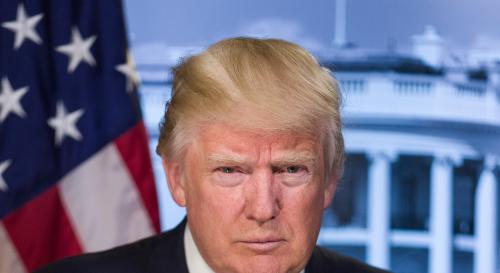
Image: The Trump White House, Public domain, via Wikimedia Commons